
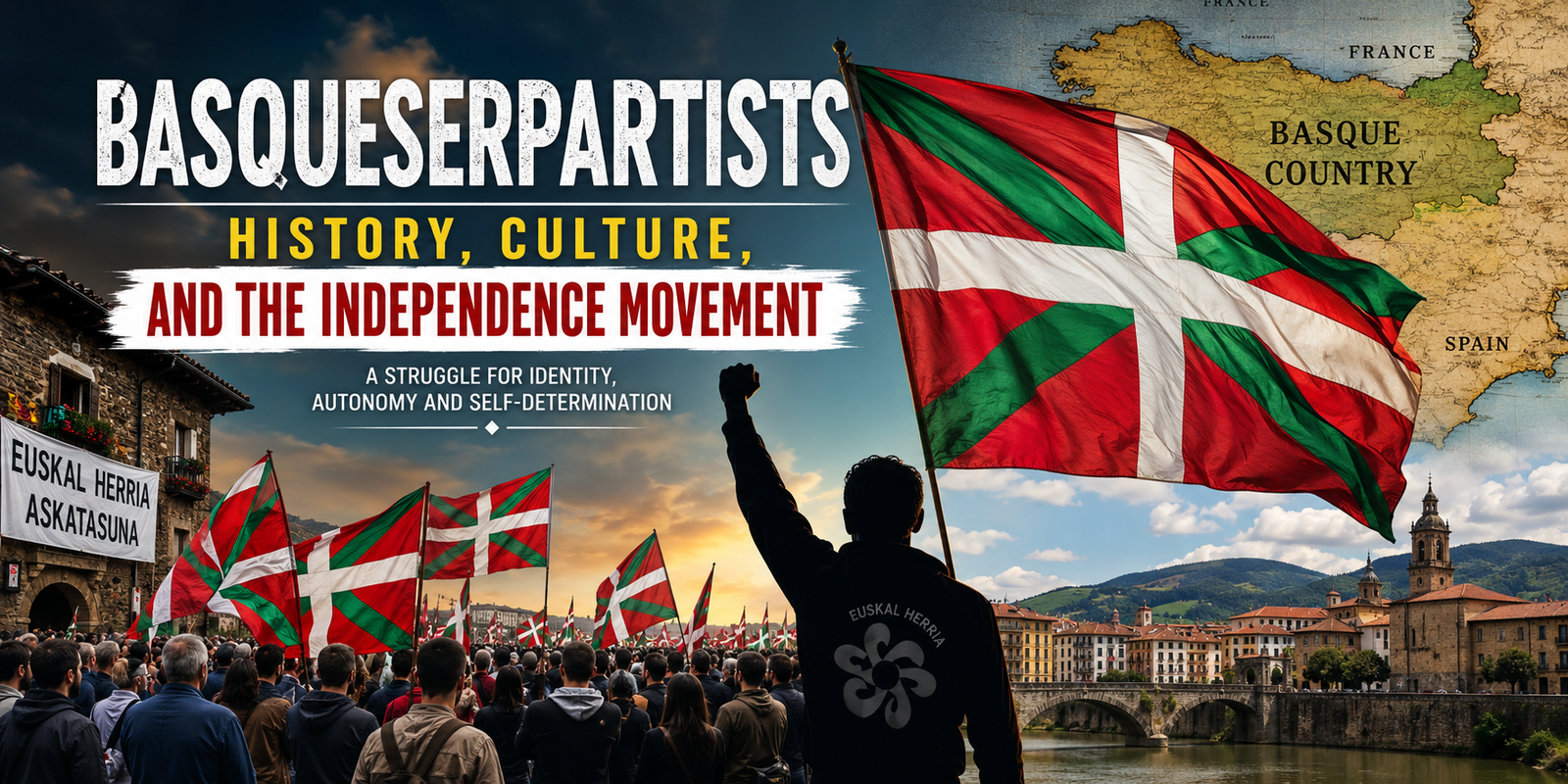
The topic of Basqueserpartists has fascinated historians, political analysts, and readers for decades. Although the term is often associated with political movements in Spain, the story behind it is much deeper than politics alone. It involves culture, language, identity, and a long history of people seeking to preserve their unique way of life.
For many years, the Basque region has stood out because of its distinct traditions and strong cultural heritage. The people of this region have maintained their language and customs despite significant political and social changes. As a result, discussions about Basqueserpartists are often connected to questions of self-determination, regional autonomy, and cultural preservation.
Understanding the Basqueserpartists movement requires looking beyond headlines and examining the historical circumstances that shaped it. The movement developed over generations and evolved in response to changing political conditions.
Today, the subject remains relevant because it highlights how cultural identity can influence political decisions and social movements. It also provides valuable insight into one of Europe’s most discussed regional independence movements.
“A strong cultural identity can shape history just as much as political power.”
Quick Facts About Basqueserpartists
| Topic | Information |
|---|---|
| Region | Basque Country |
| Location | Northern Spain and Southwestern France |
| Main Language | Euskara (Basque) |
| Main Goal | Greater autonomy or independence |
| Cultural Focus | Language and traditions |
| Historical Significance | Major regional movement in Europe |
| Modern Status | Primarily political and democratic |
The Basque region has a long and unique history. Because of this, many people continue to study the Basqueserpartists movement to understand how regional identity influences political development.
The movement is often viewed as an example of how culture and politics can become closely connected over time.
Who Are the Basque People?
To understand Basqueserpartists, it is necessary to understand the Basque people themselves.
The Basques are considered one of the oldest cultural groups in Europe. Their language, Euskara, is unique because it is not directly related to most other European languages. This linguistic uniqueness has helped preserve a strong sense of identity throughout history.
For centuries, Basque communities maintained local traditions, social structures, and cultural practices. These customs became an important part of regional life and helped strengthen community ties.
Many Basques view their culture as something worth protecting and preserving. This cultural pride eventually contributed to the rise of nationalist and separatist ideas.
While political opinions vary among Basque citizens, the importance of cultural heritage remains widely recognized throughout the region.
The Historical Origins of Basqueserpartists
The roots of Basqueserpartists can be traced back to the nineteenth century, when nationalism began growing across Europe.
During this period, many regions started emphasizing their unique identities. In the Basque Country, people became increasingly concerned about protecting local traditions and maintaining regional autonomy.
Economic and political changes also influenced public opinion. Industrial growth brought opportunities, but it also introduced social transformations that affected traditional lifestyles.
As these changes occurred, nationalist thinkers argued that the Basque people possessed a distinct identity deserving recognition and protection.
Initially, the movement focused more on cultural preservation than political separation. However, over time, some groups began advocating stronger forms of self-government and independence.
The Importance of Basque Culture
Culture is one of the most important aspects of the Basqueserpartists movement.
Language plays a central role in this identity. Euskara has survived for centuries despite political changes and outside influences. Many people view it as a symbol of resilience and cultural continuity.
Traditional music, dance, festivals, and local customs also contribute to Basque identity. These cultural expressions help connect communities across generations.
Educational programs and cultural organizations continue working to preserve these traditions. Their efforts have strengthened awareness of Basque heritage both within Spain and internationally.
For supporters of Basqueserpartists, cultural preservation is often just as important as political goals.
Growth of Nationalist Ideas
As the twentieth century approached, nationalist ideas became more organized and influential.
Political leaders and intellectuals promoted the idea that the Basque people should have greater control over their own affairs. They argued that local communities understood regional needs better than distant central authorities.
These ideas gained support among people who wanted stronger protections for language, culture, and local governance.
At the same time, opinions within the movement remained diverse. Some individuals favored increased autonomy within Spain, while others supported complete independence.
This diversity continues to characterize discussions about Basqueserpartists today.
Political Challenges and Social Change
The history of Basqueserpartists has been shaped by periods of political tension and social change.
Throughout the twentieth century, debates over regional rights became increasingly significant. Questions about autonomy, representation, and self-government often dominated political discussions.
Economic developments also influenced public attitudes. Industrial growth transformed parts of the Basque region, creating new opportunities while also introducing challenges.
As society evolved, the movement adapted to changing conditions. New generations brought different perspectives and priorities, influencing the direction of political activism.
These developments helped shape the modern identity of Basqueserpartists and contributed to ongoing debates about the region’s future.
Why Basqueserpartists Attract Global Attention
The Basqueserpartists movement is not only important within Spain. It has also attracted international interest because it raises broader questions about identity and self-determination.
Scholars often study the movement to understand how regional cultures interact with national governments. Political scientists frequently compare it with similar movements around the world.
The movement demonstrates how cultural identity can remain influential even in highly modernized societies.
It also highlights the challenges of balancing regional aspirations with national unity. These themes continue to make Basqueserpartists an important subject in academic and political discussions.
The Role of Identity in the Movement
Identity has always been at the center of Basqueserpartists.
Supporters often emphasize the importance of preserving language, traditions, and historical memory. They view these elements as essential parts of their community.
For many people, the movement is not simply about politics. It is also about maintaining a connection to heritage and ensuring that future generations understand their cultural roots.
This focus on identity helps explain why the movement has remained relevant over such a long period.
Even as political circumstances change, cultural identity continues to influence public opinion and community values.
Modern Basqueserpartists Movement
The modern Basqueserpartists movement is very different from what it was decades ago. Today, most discussions about Basque identity and independence take place through democratic institutions, political parties, and public debate.
Regional elections, local government, and cultural organizations now play a major role in shaping the future of the Basque Country. Many supporters focus on increasing autonomy, preserving cultural traditions, and promoting the Basque language.
This shift toward peaceful political participation has changed how the movement is viewed both inside and outside Spain. Instead of conflict, the focus is increasingly placed on dialogue, representation, and democratic decision-making.
Many younger generations are also approaching the issue differently. While they remain proud of their heritage, they often balance cultural identity with modern economic and social priorities.
Economic Importance of the Basque Region
One reason the Basque Country receives international attention is its strong economy.
The region is known for its advanced industries, technology sector, manufacturing capabilities, and high standard of living. Cities such as Bilbao have become symbols of economic transformation and urban development.
Economic success has influenced debates surrounding Basqueserpartists. Some supporters believe the region could sustain itself independently because of its economic strength. Others argue that cooperation within Spain provides greater stability and opportunity.
Regardless of political opinion, the economic achievements of the Basque region are widely recognized. The area continues to attract investment, tourism, and international business interest.
This economic strength has helped shape modern discussions about regional autonomy and self-government.
Basqueserpartists and Cultural Preservation
For many people, the most important aspect of Basqueserpartists is not politics but culture.
Language preservation remains a major priority. Schools, universities, and media organizations actively promote Euskara to ensure it remains an important part of daily life.
Traditional festivals continue to attract large crowds and celebrate local customs. Music, food, sports, and art all contribute to maintaining a strong cultural identity.
Many supporters believe that preserving culture is essential regardless of political outcomes. They argue that language and traditions should continue to thrive for future generations.
As a result, cultural preservation remains one of the strongest and most enduring elements of the movement.
Public Opinion and Political Diversity
An important fact about Basqueserpartists is that there is no single viewpoint shared by everyone in the region.
Some people strongly support independence. Others prefer greater autonomy within Spain. Many citizens focus primarily on economic development, education, healthcare, and social issues rather than constitutional questions.
This diversity of opinion reflects the complexity of modern politics.
Public debates often involve balancing cultural identity with practical concerns. Different generations may also have different priorities based on their experiences and expectations for the future.
Understanding this diversity is essential for anyone studying the Basqueserpartists movement.
International Influence and Academic Interest
The Basqueserpartists movement has become an important case study for researchers around the world.
Universities frequently examine the movement when discussing nationalism, regional autonomy, and cultural identity. Political scientists use it to understand how local communities interact with larger national governments.
International observers are often interested in how the Basque region has managed to preserve its unique culture while participating in modern democratic systems.
Because of this, the movement continues to be referenced in books, research papers, and educational programs.
Its historical development provides valuable lessons about the relationship between identity, politics, and social change.
Also Read: Charles Anthony Vandross: Life, Family, and Legacy
Challenges Facing Basqueserpartists Today
Like any long-term political movement, Basqueserpartists faces several challenges.
One challenge is maintaining relevance among younger generations who may prioritize global opportunities and modern lifestyles.
Another challenge involves balancing cultural preservation with rapid technological and economic change. As societies become more interconnected, maintaining unique traditions can become more difficult.
Political divisions within the movement also create challenges. Different groups may disagree on strategies, goals, or timelines for achieving greater autonomy.
Despite these challenges, discussions about Basque identity remain active and continue to influence regional politics.
The Future of Basqueserpartists
The future of Basqueserpartists will likely depend on democratic participation, cultural preservation, and evolving public opinion.
Most experts believe future developments will occur through elections, negotiations, and public dialogue rather than confrontation.
Regional autonomy, language rights, economic development, and cultural protection are expected to remain key issues.
At the same time, globalization and technological advancement will continue shaping the region’s priorities.
Whatever direction the movement takes, its history ensures that it will remain an important part of European political and cultural discussions.
Lesser-Known Facts About Basqueserpartists
There are several interesting facts that many readers do not know:
- The Basque language is considered one of the oldest surviving languages in Europe.
- The Basque Country includes areas in both Spain and France.
- Not all supporters of Basqueserpartists seek complete independence.
- Cultural preservation is often considered more important than politics by many residents.
- The region enjoys significant self-government through autonomous institutions.
- Basque traditions continue to influence art, music, cuisine, and local festivals.
These facts help explain why the movement continues to attract attention worldwide.
Why the Topic Remains Relevant
The story of Basqueserpartists remains relevant because it highlights universal themes such as identity, culture, and self-determination.
Around the world, many communities face similar questions about preserving traditions while adapting to modern realities.
The Basque experience demonstrates how cultural identity can remain strong even during periods of economic, political, and social change.
It also shows how democratic institutions can provide avenues for addressing regional concerns and aspirations.
For students, researchers, and general readers, the topic offers valuable insight into the complex relationship between culture and politics.
Conclusion
The history of Basqueserpartists is a story of identity, heritage, and political evolution. Rooted in one of Europe’s oldest cultural traditions, the movement developed as people sought to preserve their language, customs, and regional identity.
Over time, the movement evolved significantly. While earlier periods focused on intense political struggles, modern discussions increasingly emphasize democratic participation, cultural preservation, and regional autonomy.
Today, the Basque Country stands as a unique example of how cultural pride can shape political conversations while also contributing to economic and social development.
Understanding Basqueserpartists provides a deeper appreciation of how communities work to preserve their heritage while adapting to a changing world.
Frequently Asked Questions
What does Basqueserpartists mean?
Basqueserpartists refers to individuals or groups associated with the Basque separatist movement, which seeks greater autonomy or independence for the Basque region.
Where is the Basque Country located?
The Basque Country is located in northern Spain and southwestern France, with most political discussions centered on the Spanish region.
Why do Basqueserpartists support autonomy?
Many supporters believe greater autonomy helps protect Basque culture, language, traditions, and local decision-making.
Is the movement still active today?
Yes. Modern Basqueserpartists discussions continue through democratic politics, cultural organizations, and public debate.
What role does language play in the movement?
Language is central to Basque identity. Preserving Euskara is considered one of the movement’s most important goals.
Why is the Basqueserpartists movement important?
The movement is important because it demonstrates how cultural identity can influence political decisions and shape regional history.
